
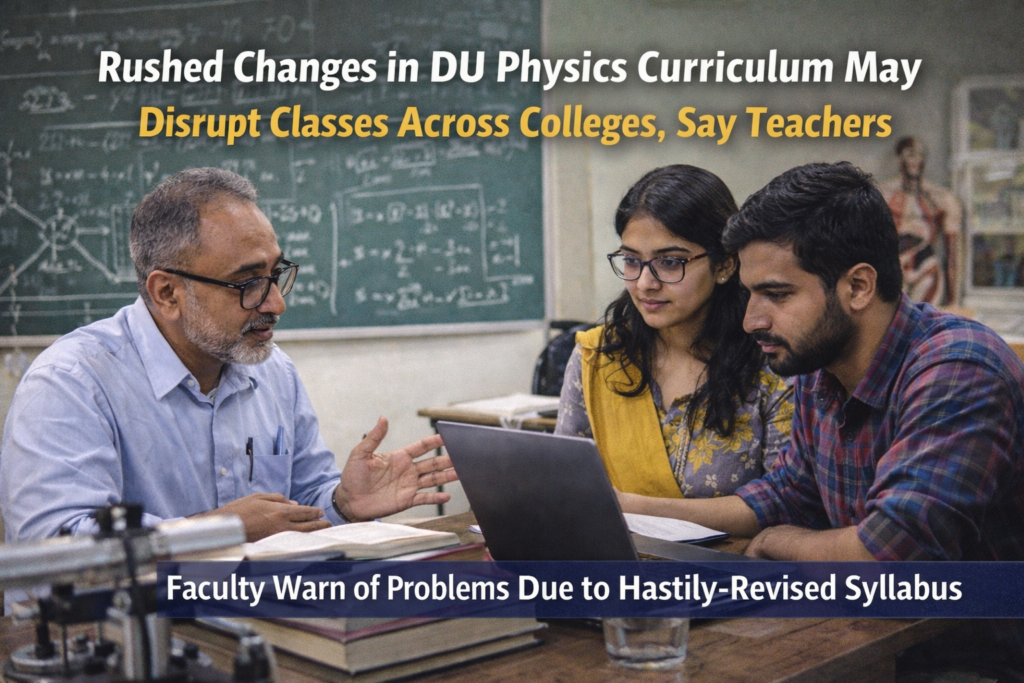
Concerns are growing across Delhi University colleges after recent changes were introduced to the Physics curriculum, with teachers warning that the revisions have been implemented in haste and could disrupt regular academic activities. Faculty members argue that the lack of adequate preparation and consultation may negatively impact both teaching and learning processes.
According to teachers from several DU colleges, the revised syllabus was rolled out without sufficient time for faculty orientation or academic planning. Physics, being a concept-heavy and laboratory-oriented subject, requires careful structuring of coursework, availability of updated study material, and proper lab scheduling. However, many instructors claim these essential steps were overlooked before enforcing the new curriculum.
Faculty members have also pointed out that reference materials, textbooks, and laboratory manuals aligned with the revised syllabus are either unavailable or incomplete. This has created confusion among students and teachers alike, making it difficult to conduct classes smoothly. In some colleges, teachers fear that unfinished preparation could lead to uneven learning outcomes across different institutions.
Another major concern raised is the absence of meaningful consultation with teachers before finalizing the changes. Educators argue that curriculum reforms should follow a phased approach, allowing sufficient time for feedback, pilot implementation, and academic adjustment. Sudden changes, they say, risk undermining the very objective of improving academic standards.
The issue has sparked a broader debate about decision-making in higher education institutions. While curriculum updates are necessary to keep pace with scientific advancements and global academic trends, teachers stress that reforms must prioritize academic stability and student welfare.
As the new semester progresses, faculty members are urging the university administration to reconsider the pace of implementation and engage in dialogue with departments. The situation highlights the need for balanced reforms that strengthen education without disrupting classrooms.