
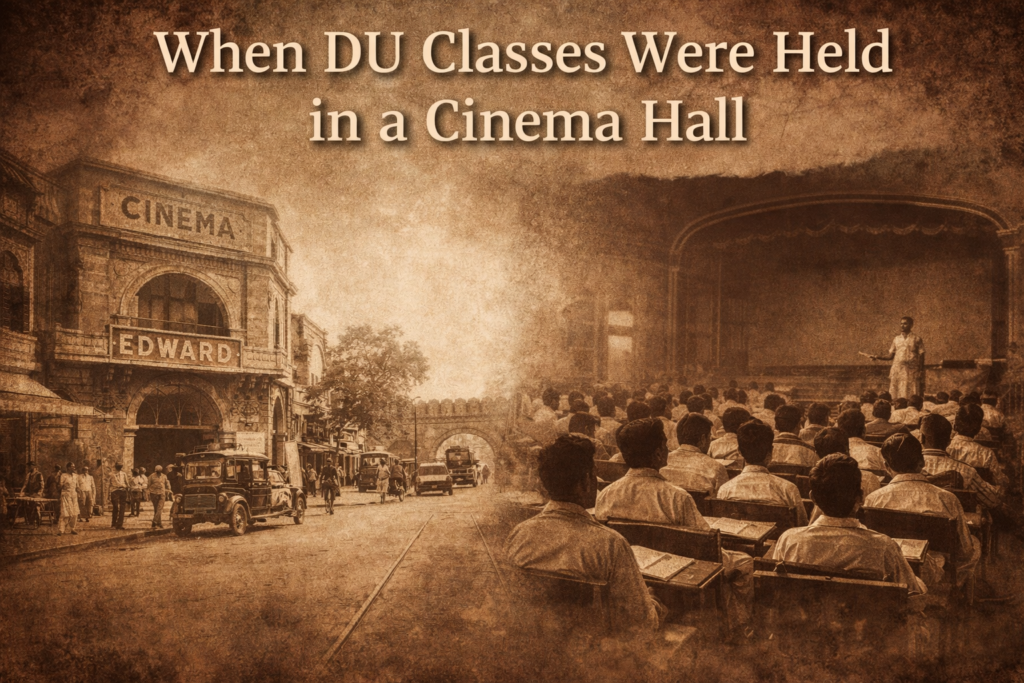
Delhi University is widely known today as one of India’s premier educational institutions, but few students and alumni are aware that one of its earliest academic spaces began its journey as a cinema hall near Kashmere Gate. This forgotten chapter of DU’s history offers a fascinating glimpse into how the university evolved during its formative years.
When Delhi University was established in 1922, it did not have the sprawling campuses and iconic buildings that students see today. Instead, classes were initially held in temporary spaces. One such location was a cinema building near Kashmere Gate, which was repurposed to function as a classroom and academic centre. Old photographs from the time reveal rows of students seated inside what was once an entertainment venue, now transformed into a space for learning.
This makeshift arrangement reflected the resource constraints and ambitions of a young university striving to establish itself in colonial India. The cinema hall provided shelter for academic activities until more permanent infrastructure could be developed. Over time, Delhi University expanded rapidly, moving towards purpose-built campuses and colleges across the city.
The Kashmere Gate building holds immense historical value, not just as a structure but as a symbol of resilience and innovation. It represents a period when education adapted to circumstances, proving that academic spirit does not depend solely on grand buildings but on intent and perseverance.
Today, as students walk through modern lecture halls and digital libraries, the story of DU’s humble beginnings serves as a reminder of how far the institution has come. Preserving and sharing such histories is essential, as they connect present generations with the struggles and aspirations that shaped one of India’s most influential universities.