
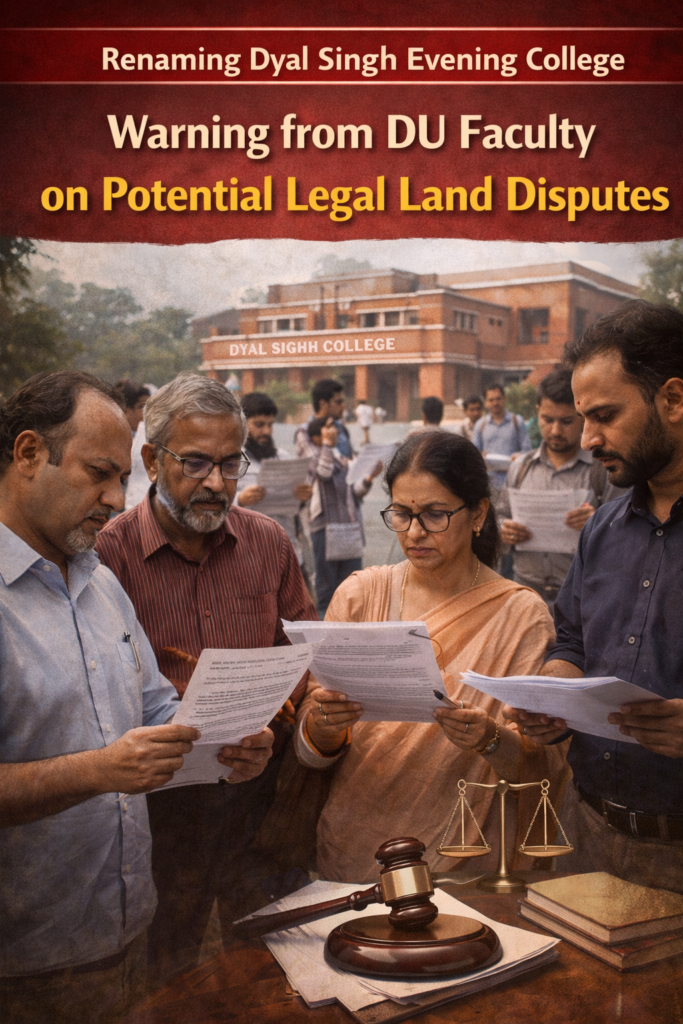
A group of teachers from Delhi University has raised serious concerns over a proposal to rename Dyal Singh Evening College, warning that such a move could potentially lead to land ownership disputes and legal complications. The teachers have formally written to the university’s Academic Council, urging caution before taking any decision on the matter.
According to the teachers, Dyal Singh Evening College was established under specific legal and historical arrangements, including land ownership linked to trusts and donor agreements. Any attempt to rename the institution, they argue, may violate the original terms under which the land was allotted, opening the door to prolonged litigation.
In their representation to the Academic Council, faculty members stressed that renaming a college is not merely a symbolic or administrative decision. They warned that altering the institution’s identity could invite claims from stakeholders associated with the original trust, potentially jeopardizing the university’s control over the property.
The teachers also expressed concern over the lack of transparency and consultation surrounding the proposal. They pointed out that such a sensitive issue requires detailed legal scrutiny and wider academic discussion, rather than being rushed through statutory bodies.
Dyal Singh College holds historical significance within Delhi University, having served generations of students across its morning and evening shifts. Faculty members emphasized that decisions affecting its name and status must respect both institutional legacy and legal realities.
The development has once again highlighted broader debates within Delhi University regarding governance, consultation, and decision-making processes. Many in the academic community believe that policy changes of this magnitude should involve faculty, legal experts, and stakeholders to avoid unintended consequences.
As the Academic Council prepares to deliberate on the issue, teachers have urged the administration to prioritize legal clarity and institutional stability over symbolic changes that may have long-term repercussions.