
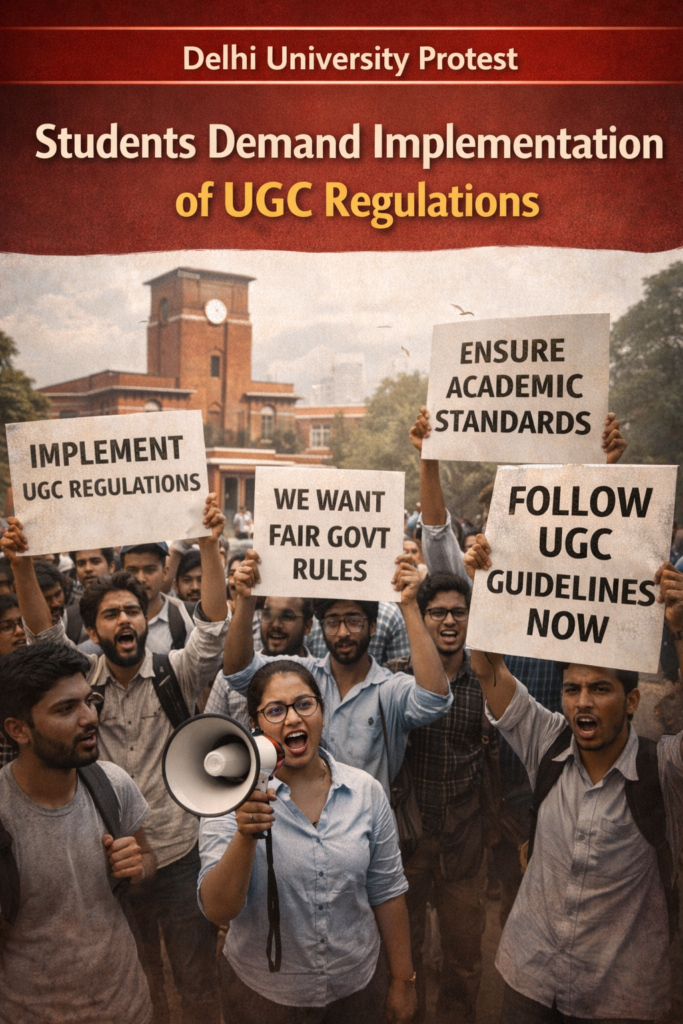
Students at Delhi University have once again taken to the campus to voice their concerns, holding a protest demanding the proper implementation of University Grants Commission (UGC) regulations. The demonstration reflects growing student dissatisfaction over what they describe as administrative delays and selective application of national higher education norms.
According to protesting students, several UGC regulations related to academic governance, admissions, faculty appointments, and student welfare have not been implemented uniformly across the university. They argue that the lack of compliance has created confusion and uncertainty, directly affecting academic progression and institutional transparency.
During the protest, students raised slogans and carried placards calling for accountability and immediate action by the university administration. Representatives claimed that despite repeated appeals and memorandums, their concerns have not received meaningful responses from authorities.
Student groups emphasized that UGC regulations are designed to ensure fairness, academic standards, and equal opportunities across public universities. Failure to follow these guidelines, they argue, weakens students’ trust in the system and undermines the credibility of higher education institutions.
The protest also highlighted broader anxieties surrounding policy changes in Indian universities. Students expressed fears that deviations from UGC norms could negatively impact degrees, research opportunities, and future career prospects.
University officials, however, have maintained that regulatory matters involve procedural complexities and ongoing consultations. They have assured students that issues are being examined at appropriate levels.
As debates around autonomy, regulation, and governance continue, the protest at Delhi University underscores a growing demand among students for transparency, dialogue, and rule-based administration. The coming weeks may prove crucial in determining how the university responds to these demands.