
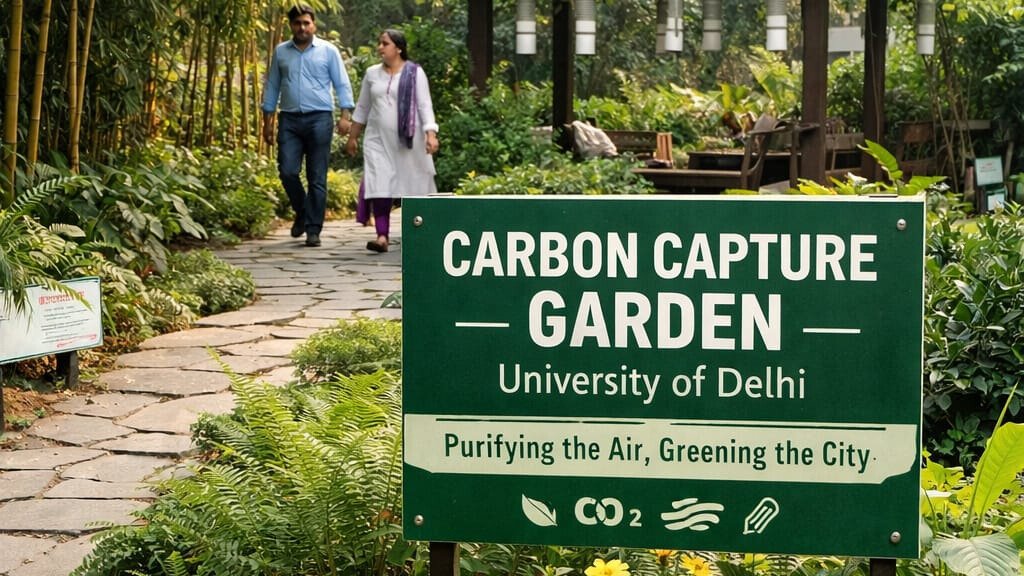
In an innovative step towards combating air pollution, Delhi University researchers have developed a unique eco-solution — a specially designed “garden that breathes” aimed at capturing carbon emissions and improving urban air quality.
The project focuses on creating a carbon-absorbing green space, combining scientific research with sustainable landscape design. Unlike conventional gardens, this model integrates plant species and structural elements strategically arranged to maximize carbon capture and air purification. The concept is rooted in environmental science but tailored to suit Indian urban conditions, where pollution levels remain a major concern.
Delhi, particularly during winter months, faces severe air quality challenges. Vehicular emissions, industrial output, and seasonal factors contribute to rising pollution levels. Against this backdrop, the university’s initiative represents a localized, practical solution that can be replicated across cities.
According to researchers involved in the project, the garden is not just about planting trees. It incorporates:
- High carbon-absorbing plant species
- Vertical and layered planting systems
- Soil management techniques that enhance carbon sequestration
- Micro-climate optimization to improve oxygen flow
The design aims to demonstrate how urban green infrastructure can actively function as a pollution mitigation tool rather than merely as decorative landscaping.
Experts believe such innovations are critical for cities like Delhi, where large-scale environmental reforms take time. Community-level and campus-based projects can act as living laboratories, encouraging awareness and policy inspiration.
The initiative also aligns with broader sustainability goals, reinforcing how academic institutions can lead climate-conscious innovation. If scaled effectively, similar breathing gardens could be integrated into schools, corporate campuses, residential colonies, and public parks.
As climate change and air pollution continue to challenge urban India, Delhi University’s “carbon capture, Indian style” approach signals hope — blending science, sustainability, and local adaptability.